Use one picture and one action
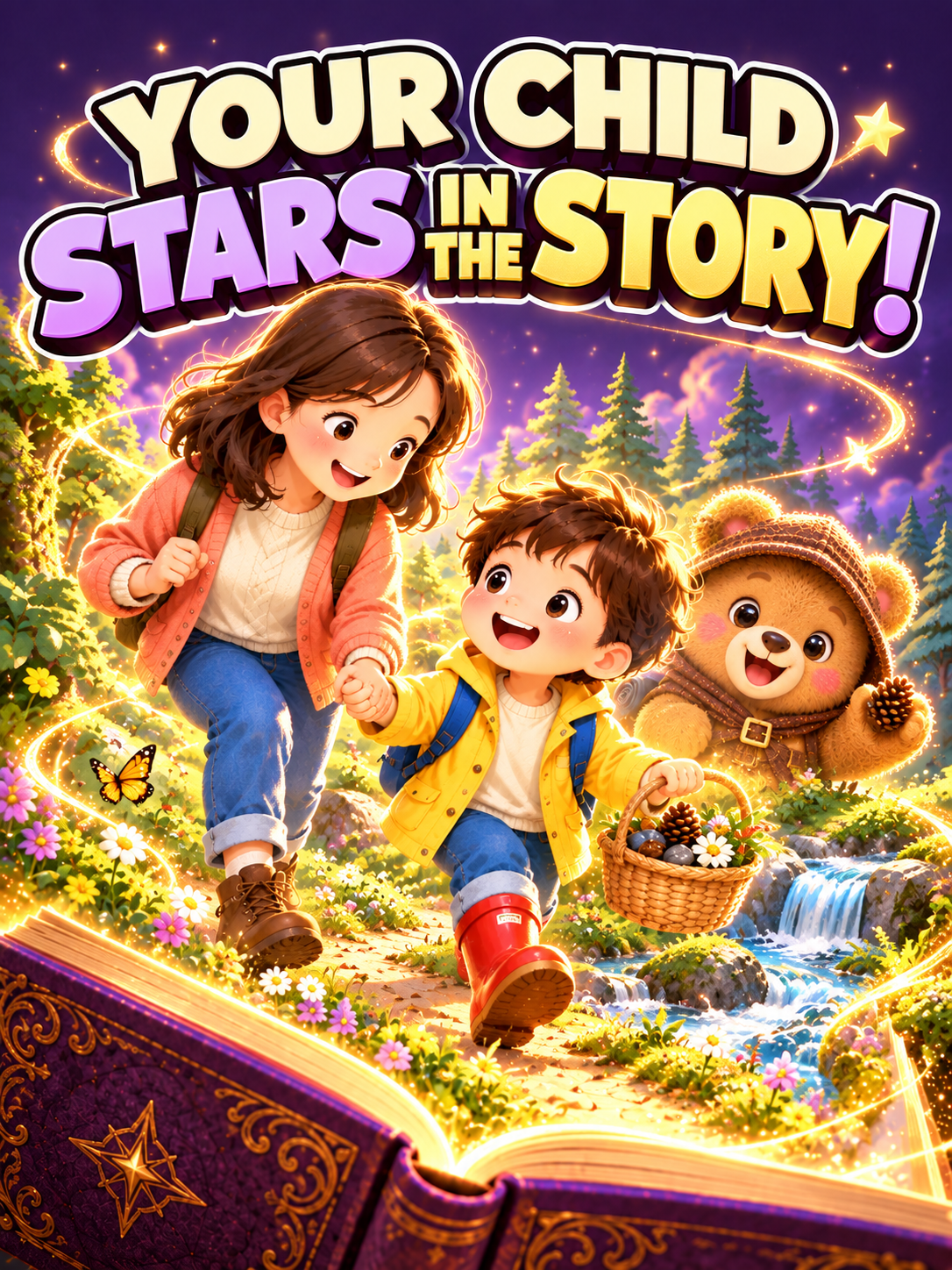
“乐乐穿着红色雨靴,和妈妈去森林寻宝。” identifies a character, clothing, a companion and an action. Looking for those details in the illustration gives a parent concrete things to discuss.
This is a suggested reading routine, not a measured learning-outcome claim. If a generated picture differs from the text, address that difference instead of teaching it as fact.
Hear the Chinese and its English counterpart
The English sentence is: “Lele put on his red rain boots and went treasure hunting in the forest with Mama.” Both recordings correspond to the same sentence in the same finished book.
Play a complete sentence before repeating a useful part. A parent who is less fluent in Chinese can first establish the situation in English, then return to the Chinese characters and action.
Explore one word or idea
You might discuss when rain boots are useful, then return to why Lele is getting ready to leave. These are editorial reading suggestions, not lines spoken by the model in the demonstration.
Supported interactive words in the app can lead to relevant cards. This does not mean every interface label is tappable or every word has every kind of expanded material.
Check both the example and the access conditions
The video combines editorial explanation and actual book narration. It lets you assess the text, sound and pacing; it does not replace current access, device or eligibility information.
Story, illustration and audio options may carry different usage costs. Check generated content before deciding how to use it with your family.
Questions before you begin
Must the two languages match word for word?
No. Check that they express the same characters, action and situation. Natural wording and order may differ, and generated language may still need correction.
Does listening guarantee that a child learns Chinese?
No outcome is guaranteed by this demonstration. It shows reading and narration functions; an appropriate learning routine depends on the user.