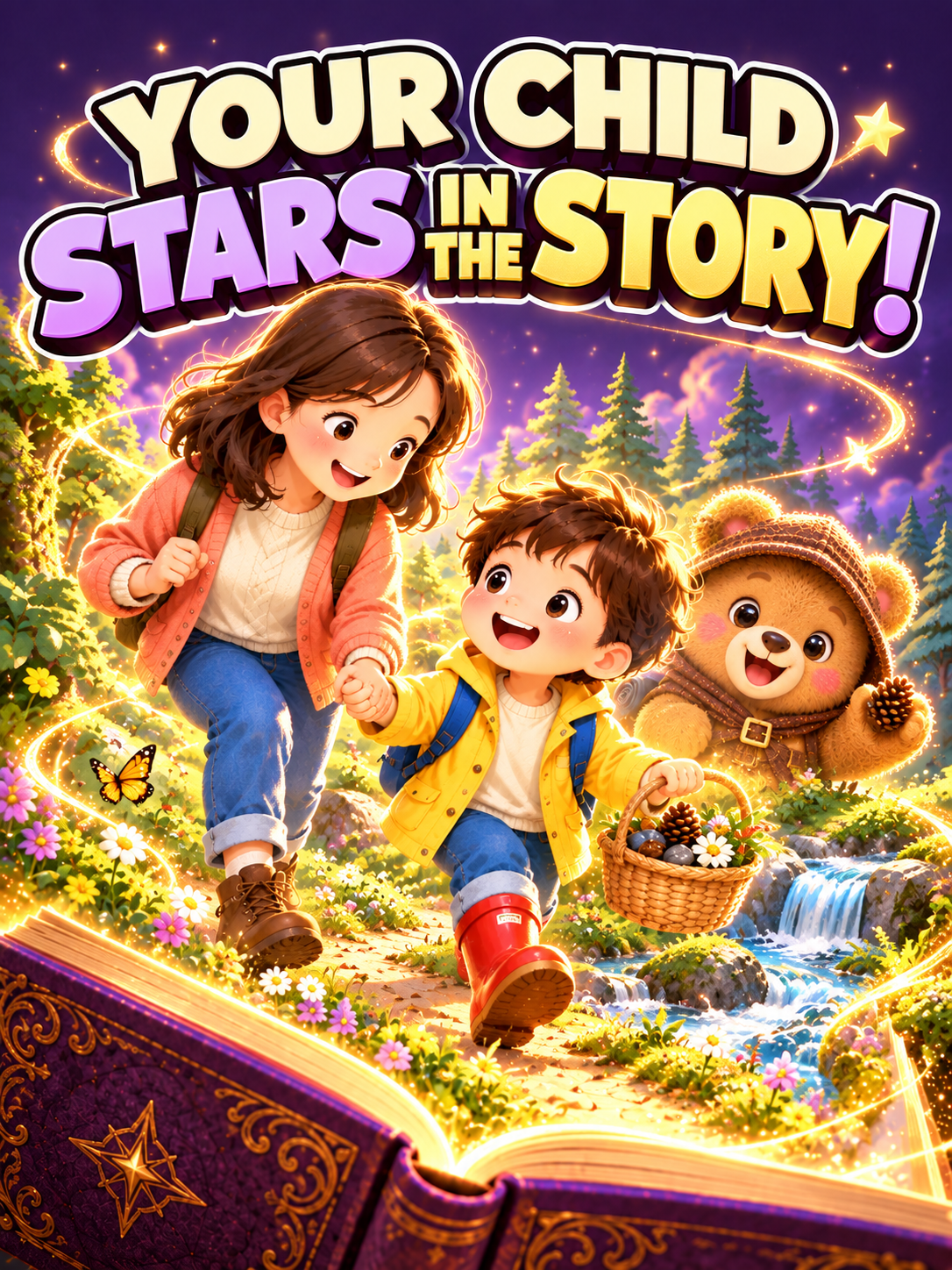
Start with a clear story situation
The demonstration is called “Lele and Mama Go Treasure Hunting in the Forest.” A name and family relationship identify the characters, while the treasure hunt gives their actions a shared purpose.
Before creating, answer three questions: who is the main character, who joins them, and what are they trying to do? This is a planning method, not a guarantee that any prompt produces the same outcome.
Compare the original draft, edited draft and finished sentence
The original Chinese opening was “星期天,乐乐和妈妈一起去森林里寻宝。” Before confirming, it was changed to “乐乐穿着红色雨靴,和妈妈去森林寻宝。” Both are retained in the original and confirmed drafts from this same creation.
Only that first sentence changed in the nine-sentence draft. The edit adds a visible clothing detail while retaining Lele, Mama and the forest treasure hunt. The finished opening below matches the confirmed draft, and the video shows the edit and its result.
Check that the result reflects your choices
The finished sentence is: “乐乐穿着红色雨靴,和妈妈去森林寻宝。” Its English version is: “Lele put on his red rain boots and went treasure hunting in the forest with Mama.”
The name, Mama, red rain boots and forest adventure belong to the same result. Check later pages for consistent relationships, actions and illustrations, too.
Listen to the same book in both languages
The demonstration plays the same sentence from the same book in Chinese and English. Listen to a complete sentence before discussing its meaning with the picture; the two languages do not need a mechanical word-for-word alignment.
Names are used for demonstration. Editorial narration is separate from the book’s actual read-aloud audio, and some waiting is edited out.
Plan your own version
Choose one small situation, review the draft, and only then decide whether to continue.
- Character: use a demonstration name or a name you are authorized to use.
- Relationship: include the family member or companion this story needs.
- Interest: choose a specific activity such as a forest treasure hunt.
- Detail: change one object or action you can check in the result.
Questions before you begin
What if the result is not what I wanted?
Review the draft and use the editing workflow currently available. Check the app for the scope and cost of redoing completed assets; do not assume unlimited revisions.
Should I enter every detail about a real child?
Provide only information needed for the story and that you are authorized to use. Read the privacy notice first and avoid unnecessary sensitive information.